
How to Build a Pitched Roof
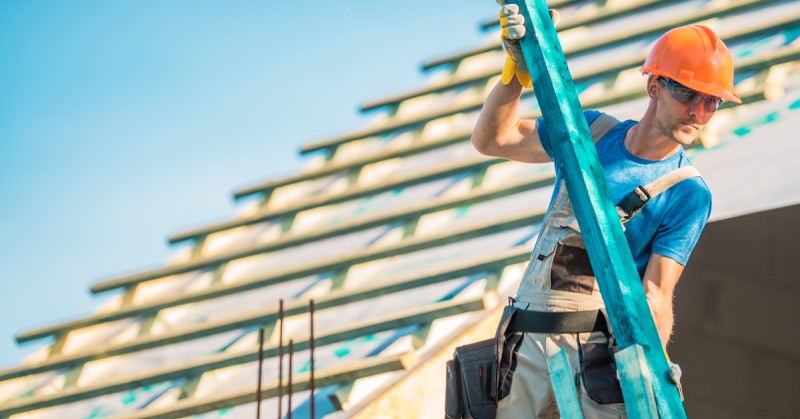
Pitched roofing is the most popular style of roofing used on British homes. Pitched roofs come in all shapes and sizes, and can be made from, and covered with a plethora of materials including timber, clay, concrete, metal and much, much more.
For many, the prospect of building a roof is perhaps the most daunting aspect of constructing a home. A lot depends on the quality of a roof and its construction, including protecting the homeâs inhabitants from the elements, the houseâs structural integrity and of course, the value of the property. This is why many leave the construction of their homeâs pitched roof to the professionals. After all, building a pitched roof is a very big and important job.
But by no means is building a roof impossible for a confident DIYer. It can be a lengthy process, but many would argue that accomplishing the task yourself is more than worth it. This guide will give you an insight into what goes into building a pitched roof, from the planning stages all the way up to the finishing touches. Remember to take all safety precautions possible before starting construction work of any kind, including having all necessary tools and safety equipment to hand.
What are the Benefits of a Pitched Roof?
Pitched roofs are popular for a reason â there are many benefits to having one on your property. Theyâre great for old and new builds, and when built properly can last for decades. Plus, when you choose the right roofing material, your new pitched roof will be both durable and kind to the environment. With weight spread evenly across your entire roof, itâs one of the most secure structures available. Plus, pitched roofs often contain lofts, adding a whole new space to your home for storage, a bedroom, study and more. Pitched roofs are also far better than flat roofs at shedding water and debris thanks to their slope.
What do I need to Plan Before Starting?
Building a pitched roof is no mean feat. Itâs important that you make all necessary preparations before beginning any work. First, ensure that your building is suitable for a pitched roof. Is it large enough? Is it structurally sound? Is it in a good location away from trees? These questions all need a âyesâ before you can continue.
Once youâre sure that your property can accommodate a pitched roof, youâll need to calculate your roof pitch. The pitch refers to the angle of your roofâs slope, which is often expressed either as an angle or a ratio of X:12. For low-pitched roofs, 2-3:12 is most common, with up to 6:12 being used for steeper pitches.
You can calculate your roofâs pitch using a few simple mathematical equations, which we explain here in a handy blog. Alternatively, there are many apps and websites available that will calculate your roofâs pitch if youâve got the figures to hand. Calculating the pitch is an important part of building a pitched roof, as it will help to determine what materials are appropriate and exactly how many tiles or sheets you may need.
Now that youâve got all of this information, you can use it to draw up a plan of the roof. Be sure to double-check all measurements and angles, as well as the spacing required between roof trusses (the triangular frames that give your roof its shape, most often made from timber.) Now itâs time to order materials.
Choosing the Right Materials for a Pitched Roof
As we said before, another important consideration when building a pitched roof is choosing the right covering. This can depend on a number of factors, including your budget, your personal taste and the pitch of the roof youâre building. For example, many roofing sheets can be used on roofs with pitches as low as 5°, but roof tiles need at least a pitch of 10° or even 15°. If your roof has a very shallow pitch, take a look at our low pitch roofing sheets category, with sheets carefully designed to perform optimally on roofs with a low pitch.
How Do I Build My Pitched Roof?
Now that youâve been through all of the careful preparation and planning, and your materials are ready to go, itâs time to bring it all together. You can finally start constructing your roof. Here is a summary of the steps involved:
- Raise the trusses onto the roof. Lift your trusses onto the roof and space them apart according to your calculations. There is no set distance for this, as it depends entirely on your particular roof. In general you can expect roof trusses to be between 30 and 40cm apart from one another, although this can be as high as 60cm.
- Apply braces. Fit a 2â x 6â piece of timber at around 16 feet long vertically to the centre of your back wall. You can then nail another piece of the same dimensions 6 foot either side of the first piece. This process should be repeated on the other side of the roof. Braces are only temporary, so donât worry too much about making them look good!
- Fitting the roof trusses. The first trusses should be slightly larger than the lengths required for your roof and attached to the end truss. If it juts out slightly (which it should), then fit it to the central brace as securely as possible.
Repeat this step on the opposite side of the roof. Add a timber truss that spens the length of your roof and attach it to the temporary brace planks at either end of the roof. Then, you can add the rest of the trusses at regular intervals.
- Permanent bracing and sheathing. You can now install the permanent bracing at either end of your roof in a similar fashion to the temporary ones. Be sure that you do this to the manufacturerâs requirements, to ensure the firm anchoring of all roof trusses.
You can then add sheathing starting from the bottom corner and moving horizontally across the roof. Sheathing can be made out of various materials, but itâs most commonly made from plywood. Ensure that there is a small gap between each sheet, and that each join is over a roof truss. Install with large nails spaced around 6 inches apart. Begin the second row and repeat the process.
- Drip edges and underlay. Drip edges can be installed after the sheathing, along the bottom of each of the roofâs edges. Then, the underlay or breather membrane can be added to the roof. Both of these help to control moisture, acting both as a waterproof layer to protect from rainfall as well as a vapour control layer against damp and condensation. The membrane can be applied from one corner upwards, ensuring an overlap leading into the drip trays. Install one sheet, secure it and then apply the next one, with an overlap of 6 inches over the first. Continue until one side is completely lain, and then repeat on the other side.
- Add your roofing material. Finally itâs time to add your tiles, shingles or sheets. Weâve got plenty of in-depth guides on installing many of the most popular roofing materials, which weâll link to below. This process is a project all in itself, so be sure that youâve made all the necessary preparations, as correct installation is vital to your roofâs longevity.
What Are the Finishing Touches?
Once these steps have been completed, you should now be standing before your brand-new, beautiful, secure pitched roof. The first thing to do is thoroughly inspect your work, ensuring there are no glaring issues such as gaps or holes, and to ensure that your roofing material has been fixed in a secure manner.
Once youâre sure that youâre done, you can begin to clear away your tools and any excess roofing materials. Be sure to do so carefully, as you donât want to damage your roof, or more importantly, hurt yourself. Store any materials that you can away, and properly dispose of any waste. Do try to recycle as much as you can.
You should now be the proud owner of a fantastic looking, fully operational roof that will last for many years without issue. If youâve got any more questions about what materials are best for your roof, how to install them or anything else, be sure to get in touch with our award-winning customer service team. Call them on 01295 565 565, or use the handy online chat on our website. With decades of experience in all things DIY and roofing, theyâre sure to help you get started on your project as soon as possible.